An Easter Tradition
As someone who grew up in an evangelical (in the original sense of the word) church that prided itself on simple services, meaning we avoided creeds, “religious” holidays, or any recognition of the liturgical calendar, I was an adult before I heard the call-and-response, “He is risen. He is risen, indeed.” I like it. It gives me the same visceral feeling as the first time I heard the call-and-response, “God is good all the time. All the time God is good,” while sitting on half-log benches in an open-air church in Malawi. Maybe I’m just a sucker for call-and-responses.
At any rate, I was curious about the origins of the “He is risen” counterphrase. According to Luke, via the New King James Version, the phrase is spoken by the two folks who had walked with Jesus on the road to Emmaus, “He is risen indeed…” was probably shouted to 11 of the baffled and bewildered disciples.
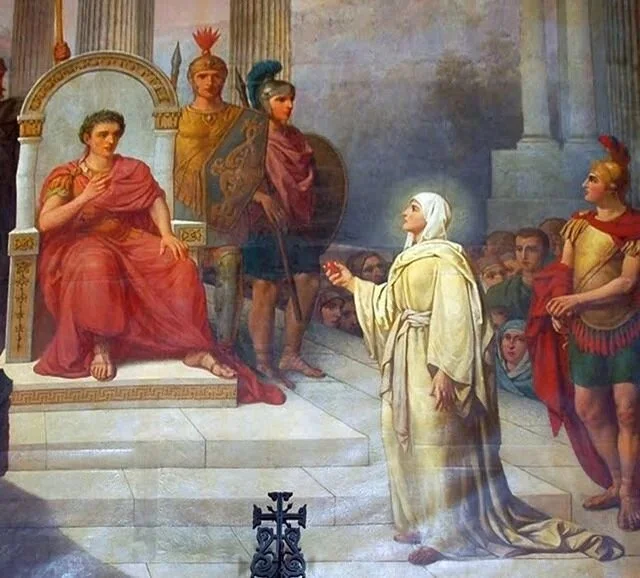
Tradition credits Mary Magdalene with next voicing the phrase when she traveled to Rome after Jesus’s ascension to have an audience with Emperor Tiberius, to whom she proclaimed the gospel with the words,
Mural in the Monastery of St. Mary Magdalene in Jerusalem, painted by Sergei Ivanov.
Tradition credits Mary Magdalene with next voicing the phrase when she traveled to Rome after Jesus’s ascension to have an audience with Emperor Tiberius, to whom she proclaimed the gospel with the words, “He is risen.” According to legend, Mary Magdalene then gave the Emperor an egg, which was a custom of the time. He scoffed that a man could no more rise from the dead than that white egg could turn red. Miraculously, the egg turned brilliant red in Mary’s hand. To this day, many Orthodox churches still hand out bright red eggs to congregants on Easter Sunday. They say the red represents the blood while the shell represents the sealed tomb. Cracking the egg demonstrates the triumph of life over death. (Pretty short jump from there to hiding dyed eggs under the boxwoods.)
The Eastern and Byzantine churches seem to have been the first to popularize the Easter expression. However, now Catholics and Protestants worldwide have joined the Orthodox in greeting one another each Easter with the phrase that started the revolution! He is risen. He is risen, indeed!